



Supply chain disruptions have become a defining challenge in electrical construction. A single missing switchgear component can halt a project, triggering penalty clauses and eroding margins. Unpredictable lead times and price volatility make bidding and scheduling increasingly difficult. Understanding how to mitigate supply chain risk in electrical construction begins with strategic frameworks that transform supply chain management from a vulnerability into a competitive advantage.
Decision-makers in electrical construction need proactive approaches that go beyond reactive fixes. Six actionable strategies help you navigate disruptions, protect project budgets and build resilient electrical construction projects that deliver on time and on budget.
The High Stakes of Supply Chain Instability
Electrical and specialty contractors face distinct challenges that require proactive management to prevent project-wide disruption. Understanding the tangible risks of supply chain instability is the first step toward mitigating them.
Inaccurate Lead Times
Unpredictable lead times for critical electrical components create cascading delays that impact every aspect of project execution. Effectively managing lead times for switchgear now requires more adaptive and proactive planning.
Transformers and switchgear with lead times stretching from months to years force electrical contractors to make procurement decisions well in advance of project start dates. Inaccurate estimates bring consequences that include:
- Contractual penalties: Missed deadlines trigger liquidated damages that erode project margins.
- Extended overhead costs: Idle equipment and delayed crew mobilization drain budgets.
- Damaged relationships: General contractors who depend on your timeline commitments lose confidence in your reliability.
Price Volatility
Price fluctuations for transformers and electrical equipment can destroy project budgets before a shovel hits the ground. Following project estimating best practices requires significant contingency buffers, but even conservative estimates struggle to account for the rapid swings that have characterized recent years.
While headline inflation has receded from its 2022 peaks, underlying price pressures remain stubborn in many economies. The risk of renewed volatility from geopolitical shocks and supply chain disruptions is high.
Submitting competitive bids while protecting your profitability demands more sophisticated approaches to pricing and procurement timing. Overlooking this volatility could result in fixed-price contracts that cut into profitability.
Equipment Scarcity
Equipment scarcity poses an even more fundamental risk than pricing — the inability to source necessary equipment at all. Manufacturers with backorders lasting years force electrical contractors to consider lesser-known brands that may not satisfy project specifications or quality standards.
Working with suppliers who maintain extensive ready-to-ship inventories helps mitigate scarcity risks. Sunbelt Solomon’s quick-ship inventory provides immediate access to transformers, switchgear and ancillary electrical equipment.
Premature Engineering Decisions
Engineers and designers working without input from procurement teams may prioritize performance specifications without considering availability or lead times. The result is a design that looks perfect on paper but proves impossible to build on schedule. Integrating procurement expertise into the engineering phase helps identify and mitigate these risks before they become locked into contract documents.
6 Strategies for a Resilient Electrical Construction Supply Chain
Moving from a reactive to a proactive supply chain posture requires implementing specific, actionable strategies. These six approaches build resilience against disruptions while maintaining project profitability.
1. Adopt a Risk Management Framework
A formal, systematic approach to risk management transforms how you identify vulnerabilities, assess their potential impact and develop contingency plans before a crisis hits. Follow these steps:
- Map your critical supply chains: Identify where single points of failure exist and which components have the longest lead times.
- Document supplier relationships: Record lead times, alternative sources and backup suppliers for each critical component.
- Assess disruption scenarios: Evaluate the likelihood and impact of factory shutdowns, shipping delays and raw material shortages.
- Develop contingency plans: Create specific response protocols that outline exactly how you’ll respond when disruptions occur.
2. Diversify Your Equipment Sourcing
Successful electrical equipment procurement strategies depend on diversified sourcing methods. Diversifying your approach provides the flexibility needed to navigate supply chain uncertainty:
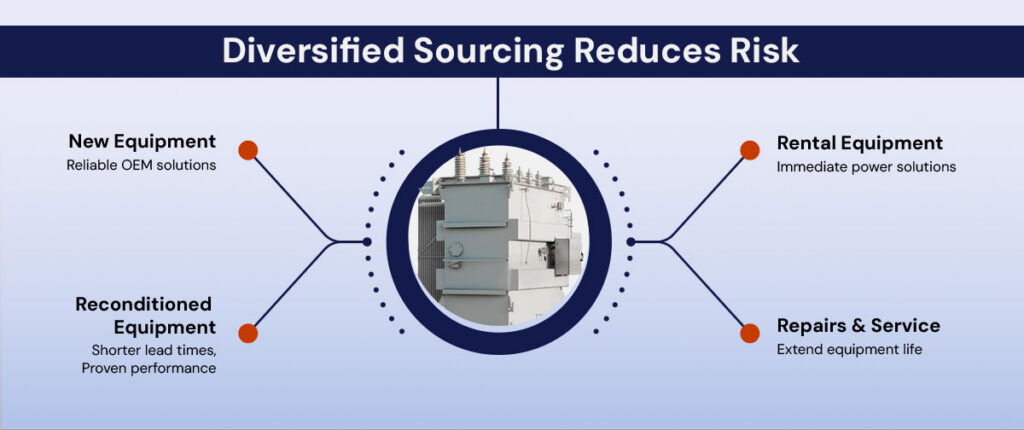
- New equipment: Purchase new transformers and switchgear when projects require standard specifications, manufacturer warranties and long-term reliability with predictable performance.
- High-quality reconditioned equipment: Reconditioned transformers and electrical equipment can offer the same performance and reliability as new units, often with shorter lead times and lower costs. Reconditioned electrical units offer Build America Buy America (BABA) Act compliance, enhanced warranties and shorter lead times than new equipment, while delivering equivalent performance at lower cost.
- Temporary power equipment rentals: Rental solutions provide immediate access to power equipment when permanent installations face delays, allowing you to maintain project momentum without capital investment.
Sunbelt Solomon specializes in BABA-compliant reconditioned transformers and switchgear with shorter lead times than new equipment, helping our clients meet project deadlines without compromising on quality or compliance. Beyond sourcing new and reconditioned equipment, Sunbelt Solomon also repairs existing units and purchases used equipment, giving you multiple pathways to keep projects on track. This full-service approach ensures you have options whether you need immediate rental power, long-term equipment purchases, or emergency repairs to existing assets.
3. Explore Domestic Manufacturing Options
Prioritizing domestic suppliers and near-shoring reduces exposure to international shipping delays, tariffs and geopolitical disruptions. The importance of domestic supply chains extends beyond individual projects to national infrastructure resilience. Domestic manufacturing also positions contractors favorably for Buy America Build America projects. This opens opportunities that competitors relying solely on imported equipment cannot pursue.
4. Optimize Labor with Prefabrication
Off-site prefabrication and kitting of electrical components reduce on-site labor requirements. It also minimizes the impact of material delays on construction schedules. Assembling electrical panels, control systems and wiring harnesses in a controlled shop environment can improve quality while creating schedule flexibility.
If equipment deliveries run late, prefabricated components can often be staged and tested separately so that other work can proceed. This approach also reduces the on-site skilled labor hours required.
5. Adjust Your Construction Sequencing
Flexible project schedules allow you to accommodate potential delays in critical equipment delivery without bringing the project to a halt. Mitigating construction delays requires rethinking traditional construction sequencing to identify work that can proceed independently of long-lead items.
Effective sequencing strategies include:
- Plan alternative work sequences: Identify activities that can proceed even when specific equipment is delayed.
- Identify float activities: Determine noncritical path work that can absorb schedule adjustments.
- Maintain proactive communication: Keep general contractors informed about sequencing alternatives and potential impacts.
- Create schedule buffers: Build realistic contingency time into critical path activities.
This proactive approach transforms delays from project-stopping crises into manageable schedule adjustments.
6. Foster Strategic Supply Chain Partnerships
The shift from transactional supplier relationships to true partnerships brings tangible benefits in supply chain resilience. An electrical trade partner who understands your organization provides:
- Greater visibility into inventory and production
- Expert consultation on equipment selection
- Collaboration on long-term planning
Strategic partnerships enable collaborative planning that builds true supply chain resilience. Partners with extensive inventories can provide early access to equipment, offer creative solutions during shortages and share market intelligence that helps you make better procurement decisions. The right partner works closely with electrical contractors to anticipate needs, identify alternatives and ensure projects have the equipment they need when they need it.

Get Started With Sunbelt Solomon
Supply chain volatility doesn’t have to derail your projects. Sunbelt Solomon helps electrical contractors understand how to mitigate supply chain risk in electrical construction through strategic sourcing methods. Finding the right equipment when you need it, getting it quickly and ensuring quality through expert consultation — these factors determine project success, and Sunbelt Solomon delivers all three.
Our team provides the equipment solutions and industry expertise to protect your timelines and margins. Contact Sunbelt Solomon today to discuss your project, or explore our quick-ship inventory for equipment available now.