

The silence after a major natural disaster is deafening. As chaos subsides, communities and industries are left paralyzed and the need to restore power is critical. Backup generators are just one part of emergency power solutions. Large-scale power restoration depends on an often-overlooked component — the power transformer.
Without working transformers, electricity from power plants or emergency turbines can’t be reduced to usable voltages for hospitals, factories or homes. Facility managers and utility operators must understand the role of transformers in disaster recovery to minimize downtime and ensure an uninterrupted power supply.
This guide explains why transformers matter and how rental solutions strengthen your disaster preparedness.
Why Power Grids Fail During Natural Disasters
Despite their advanced design, modern power grids are highly vulnerable to natural disasters. Severe weather often damages transmission and distribution infrastructure. Damaged substations and transformers create greater logistical challenges than downed power lines.
Transformers are especially vulnerable to environmental hazards:
- Floodwaters can contaminate insulating oil, making the unit unsafe to use.
- Debris from storms can shatter bushings or rupture cooling fins.
- Wildfire heat can damage internal insulation or cause thermal failure.
Unlike downed lines, damaged large power transformers usually need complete replacement and global supply chain issues worsen the challenge. Building a custom large power transformer can take 12 to 24 months and facilities with only one main unit can’t wait for a replacement. This gap makes immediate access to replacement transformers essential.
Transformers and Rapid Power Restoration
Understanding grid recovery requires knowing its pivot point. As the gateway for power, transformers reduce high voltages to levels suitable for distribution or facility equipment. If damaged, the upstream power supply cannot reach users.
Rapid power restoration relies on emergency power solutions that bypass damaged infrastructure. This is where temporary transformers become the heroes of disaster recovery. Instead of waiting for a permanent installation, recovery teams deploy specialized units designed for speed and flexibility.
Mobile Substations and Mobile Transformers
For utilities and large industrial sites, mobile substations are the gold standard for rapid recovery. These are essentially substations on wheels with high-voltage switchgear, transformer and protection systems mounted on a multiaxle trailer.
Mobile units are designed for plug-and-play deployment. Because they are pre-assembled and road-legal, they can be dispatched immediately to a disaster zone. Once on-site, they can be positioned and connected to the grid often within hours, bypassing a destroyed permanent substation entirely.
This allows you to restore power to tens of thousands of customers or critical industrial processes while the permanent infrastructure is rebuilt.
Padmount and Skid-Mounted Transformers
While mobile substations handle high-voltage transmission needs, distribution and facility-level recovery often use padmount or skid-mounted transformers. These units are crucial for restoring power to specific buildings like hospitals, data centers or manufacturing plants.
Skid-mounted units are particularly valuable in restoring power resilience after disasters because they are mounted on steel bases that make them easy to offload and position on uneven ground. They are often equipped with quick-connect cables and protection equipment, reducing the time electricians need to spend on termination.
Sunbelt Solomon maintains a vast inventory of these units, ensuring that whether a facility needs 500 kVA or 10 MVA, a compatible unit is ready to ship immediately after the storm passes.
3 Strategic Advantages of Transformer Rental Services
Ideally, every facility would keep a spare transformer ready for use. However, the cost of buying, storing and maintaining spare transformers is prohibitive for most organizations. This is where backup transformer rental services shift the paradigm from capital expenditure to operational resilience.
1. Speed of Deployment
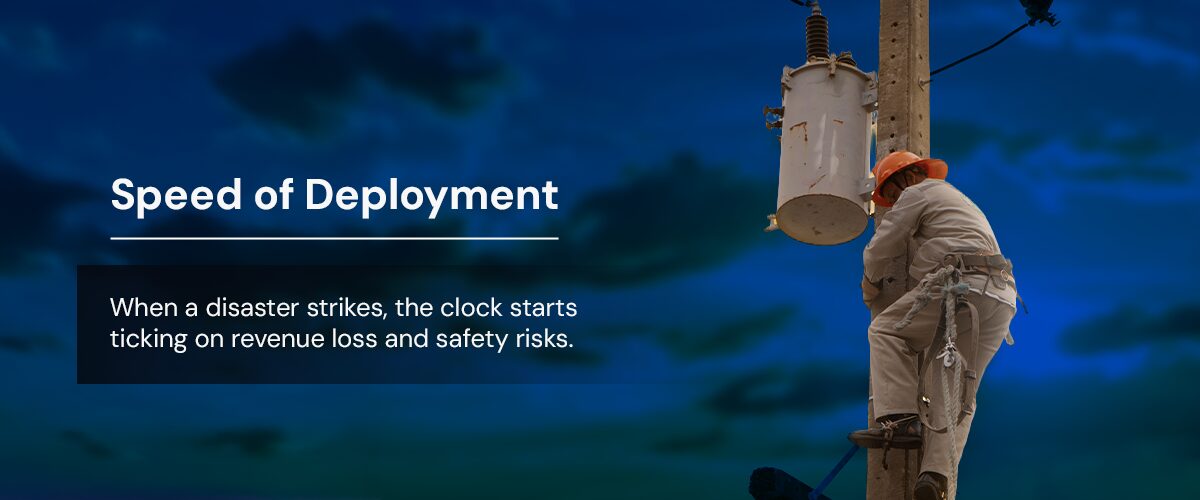
The primary metric in disaster recovery is time to power, calculated as Power (P) = Work (W) / Time (t). When a disaster strikes, the clock starts ticking on revenue loss and safety risks. Relying on a manufacturer to build a replacement is a strategy for failure.
Transformer rental services provide an immediate solution to access the equipment you need, exactly when you need it.
2. Cost-Effectiveness
Renting a transformer for the duration of a crisis is significantly more cost-effective than buying a spare that may sit idle for years. It allows businesses to treat disaster recovery power equipment as an operational expense rather than a massive up-front capital investment. It also eliminates the carrying costs associated with maintenance, testing and storage of owned spare equipment.
3. Logistical Support
Transporting a 100,000-pound transformer across a disaster-stricken region is a massive logistical challenge. Roads may be damaged, bridges compromised and permits difficult to obtain.
A specialized rental partner contributes hardware and expertise. Sunbelt Solomon, for instance, manages the heavy-haul trucking, permitting and specialized offloading required to transport the unit to the site. This comprehensive support frees your internal teams to focus on other critical aspects of recovery, knowing the power component is in expert hands.
How to Build Your Disaster Recovery Power Plan
The right time to figure out where you will get a replacement transformer is not when your facility is dark and floodwaters are rising. Ensuring power resilience after natural disasters is the result of proactive planning. By establishing a contingency plan now, you ensure your organization can weather the storm.
Here are the essential steps to building a robust power recovery plan:
- Assess your critical needs: Perform a comprehensive audit of your electrical system. Identify the specific voltages, kVA ratings and impedance values required to run your critical operations. Have a qualified engineer verify these specifications.
- Identify a strategic partner: Do not wait for an emergency to start searching for transformer suppliers. Establish a relationship with a reputable transformer rental services provider like Sunbelt Solomon beforehand. Vetting a vendor during a crisis wastes valuable time.
- Prepare the site: Determine the exact location for a temporary transformer. Is the ground stable? Can a heavy-haul truck access the area? Is there existing cabling to connect it? Pre-wiring a connection point for a temporary unit can significantly reduce your restoration time.
- Document the plan: Create a clear, step-by-step procedure manual. List the contact numbers for your rental partner, the specifications of your equipment and the names of the internal team members responsible for execution. Ensure this document is accessible offline.
Ensure Your Resilience With Sunbelt Solomon
Natural disasters may be inevitable, but prolonged power outages are not. The difference between a temporary disruption and a catastrophic operational failure often comes down to the availability of a single piece of equipment — the transformer. As the bridge between the grid and your facility, the transformer is the cornerstone of your power resilience strategy.
Sunbelt Solomon stands as the industry leader in emergency power solutions. With one of the largest inventories of transformers in North America, combined with 24/7 emergency response capabilities, we provide the certainty you need in uncertain times. In addition to supplying temporary transformer solutions, we deliver the logistical support and technical expertise required to get your lights back on when it matters most.
Don’t wait for the forecast to turn grim. Contact Sunbelt Solomon today to discuss your emergency power needs and develop a transformer rental plan to ensure business continuity.