Have you noticed your utility bills creeping upward, breakers tripping for no apparent reason or your transformer running hotter than it should? These symptoms often indicate harmonic distortion — an invisible frequency pollutant that stresses your electrical system and can cause long‑term transformer damage if left unaddressed.
If you want to combat electrical harmonics, start by learning about the causes. Once you’ve determined which devices and conditions create the distortion, you can choose practical solutions that reduce the strain on your transformer and maintain reliable performance.
What Are Harmonics in Electrical Systems?
Electrical currents come in two forms — direct and alternating. DC is typical in batteries and small electronics, while AC powers the grid and everything you plug into a wall outlet. Because AC regularly reverses direction, it can travel long distances with fewer losses.
Under normal conditions, AC follows a smooth 60 Hz sine wave, switching between positive and negative polarity 60 times per second. Linear loads like incandescent bulbs or resistive heaters draw current in a way that maintains waveform stability.
Nonlinear loads behave differently. Devices such as computers, LED lights and variable‑speed drives pull current in brief, irregular pulses that inject additional frequencies into the system. These added frequencies, known as harmonics, disrupt the clean 60 Hz waveform and create harmonic distortion.
While harmonics in power systems are not abnormal, excessive distortions can lead to wasted energy, overheating and premature equipment failure.
Sources of Harmonic Distortion in Transformers
Because transformers power everything from manufacturing facilities to office buildings and entire neighborhoods, failures or overheating events can have wide‑reaching effects. A single compromised unit can disrupt operations, create safety risks and lead to costly downtime. Familiarizing yourself with the equipment that produces harmonics — and the added stress those harmonics place on your transformer — will let you prevent these issues before they escalate.
1. Variable Frequency Drives(VFDs)
VFDs provide more precise control of electrical motors, but they must adjust frequencies and voltages to achieve this. First, they convert AC to DC, smooth the waveform and store the energy. They then invert the DC so the motors can use it as AC. This process is inherently nonlinear, and the conversion process preserves harmonic frequencies produced by nonlinear pulses. Often, fifth, seventh and eleventh harmonics are the result.
2. Power Conversion Systems
Rectifiers and inverters used in VFDs and other electronic equipment often distort electrical flow because they draw current in short, uneven pulses. When a rectifier converts AC to DC, those pulsed currents carry over into the DC side and continue to create harmonic distortion. In some cases, the switching behavior inside the rectifier can introduce additional harmonic components.
Inverters behave similarly. Even though they temporarily store energy, they don’t filter out harmonic frequencies independently. Any harmonics present on the DC side — or generated by the inverter’s switching — will reappear on the AC output unless additional filtering is available.

3. Arcing Equipment
Equipment like furnaces and welders also creates nonlinear loads. They rely on electrical surges to generate the arcs they use. These surges can result in harmonic distortions that echo through the arcing equipment and the local power grid. In arcing equipment, the sinusoidal waveform also encounters varying levels of electrical resistance that can further strengthen harmonic distortions.
How Harmonics Impact Transformer Performance and Lifespan
Beyond damaging individual pieces of equipment, harmonic distortions can reverberate through your electrical system and place additional stress on your transformer. Even when the effects aren’t immediately visible, the extra heat and electrical strain can steadily reduce efficiency, accelerate insulation breakdown and dramatically impact the transformer’s performance and lifespan.
At Sunbelt Solomon, we observe these effects in four distinct ways.
1. Thermal Stress
Harmonic distortions impede the transformer’s ability to send usable electricity. They piggyback on the 60 Hz current, taking up space within the transformer and forcing it to work harder and longer to achieve the same results. If the distortions continue long enough, the transformer can run much hotter than its labeled temperature rating allows, leading to malfunctions and excess wear.
2. High Energy Losses
Currents carrying harmonic distortions vibrate at extremely high speeds. These vibrations increase in proportion to the intensity of the distortions. For example, a 180 Hz distortion vibrates three times faster than the standard 60 Hz wave, while a 540 Hz distortion vibrates three times faster than that. Currents this intense change directions far more than your standard AC current, resulting in significantly higher energy losses, especially in the core and windings.
3. Skin Effect
High‑frequency harmonics don’t flow through conductors the same way standard 60 Hz current does. As frequency increases, it pushes current toward the outer surface of the wire — a phenomenon known as the skin effect. Because harmonics contain much higher frequencies, they concentrate current in a thinner layer of the conductor, thereby reducing the wire’s effective carrying capacity and increasing heat, which puts additional stress on transformers and other equipment.
4. Insulation Failure
The extreme temperatures generated by harmonic distortions can damage your transformer’s insulation. If the insulation fails, the heat can cause the transformer to short-circuit or fail.
These combined issues can drastically reduce electrical system efficiency and shorten your transformer’s lifespan. They may even damage the transformer beyond repair. In either circumstance, you can count on Sunbelt Solomon. Our in-field repair teams or state-of-the-art repair centers will fix solvable problems, and our expansive inventory of quick-ship transformers can close the gap as soon as possible if you have an equipment failure.

The Hidden Costs of Harmonic Distortion
When people think about the effects of harmonic distortion, they often focus solely on what it does to a transformer. But the consequences reach far beyond that. Harmonics can trigger a range of costly and disruptive issues.
- Equipment derating: Excess heat from harmonic currents forces transformers to operate below their nameplate capacity. For example, a 1,000 kVA unit may need to step down to a 700 kVA unit to stay within safe limits. That reduction cuts into the power you can deliver and slows the systems that depend on it.
- Power factor penalties: Harmonics reduce system efficiency, forcing your transformer to work harder and draw more energy to achieve the same output. This inefficiency strains equipment and directly increases your utility costs, especially in facilities with large electrical loads.
- Unplanned downtime: Harmonic distortion can interfere with protective devices like circuit breakers. When breakers misinterpret distorted waveforms as dangerous surges, they may trip unnecessarily and shut down your system. The result is avoidable downtime that disrupts operations and productivity.
Harmonic distortion deserves focused attention because it drives up operating costs, slows critical processes and can bring your entire system to a halt when you least expect it.
Sunbelt Solomon can help if harmonics affect your operations. Our team can evaluate your electrical system, pinpoint where harmonics cost you extra and recommend solutions that restore reliability and performance.
Ways to Mitigate Harmonic Distortion
Harmonic distortion isn’t inevitable or unfixable. Here are three of the most effective power quality management solutions include.
- K‑factor transformers: Engineered specifically to handle the heat and electrical stress caused by harmonic currents, K-factor transformers use oversized conductors, lower‑flux‑density cores, reinforced insulation systems and sometimes electrostatic shielding. Together, these features help the transformer dissipate heat more effectively and operate safely under nonlinear loads. Full replacement isn’t always feasible, but when it is, a K‑factor unit offers the most robust long‑term protection.
- Active and passive filtering: Harmonic filters are a decent alternative if replacing your transformer isn’t practical. Passive filters divert unwanted frequencies away from the system, while active filters inject counter-frequencies that cancel out distortions in real time. Both approaches reduce the harmonic burden on your transformer and improve power quality.
- Strategic oversizing: Another option is installing a transformer with more capacity than your load technically requires. A larger unit has thicker insulation, more cooling oil and additional thermal mass, allowing it to absorb heat more effectively. And if derating becomes necessary, the impact on your operations is far less disruptive.
How to Respond to Harmonic-Damaged Equipment
Many clients contact Sunbelt Solomon after harmonic distortion has damaged their transformers or other electrical equipment. They want to know if repairs are feasible, how long the fix will take and whether the resulting downtime will affect their operations.
When you partner with us, you get understandable answers and a realistic path to success. Our job is to make transformer maintenance and replacement as straightforward and stress‑free as possible — and we take that responsibility seriously.
Here are four ways we can help you respond to harmonic-damaged equipment.

1. Damage Forensics
Harmonic disruption is a complex phenomenon, and diagnosing the damage can be equally tricky. Our repair teams use specialized tools and technical expertise to evaluate your system and pinpoint effective solutions. We look for specific indicators of transformer health, like burned neutral wires and degraded oil. Then, we either recommend a thorough repair strategy or suggest replacements that can resolve the distortion.
2. Flexible Repair Services
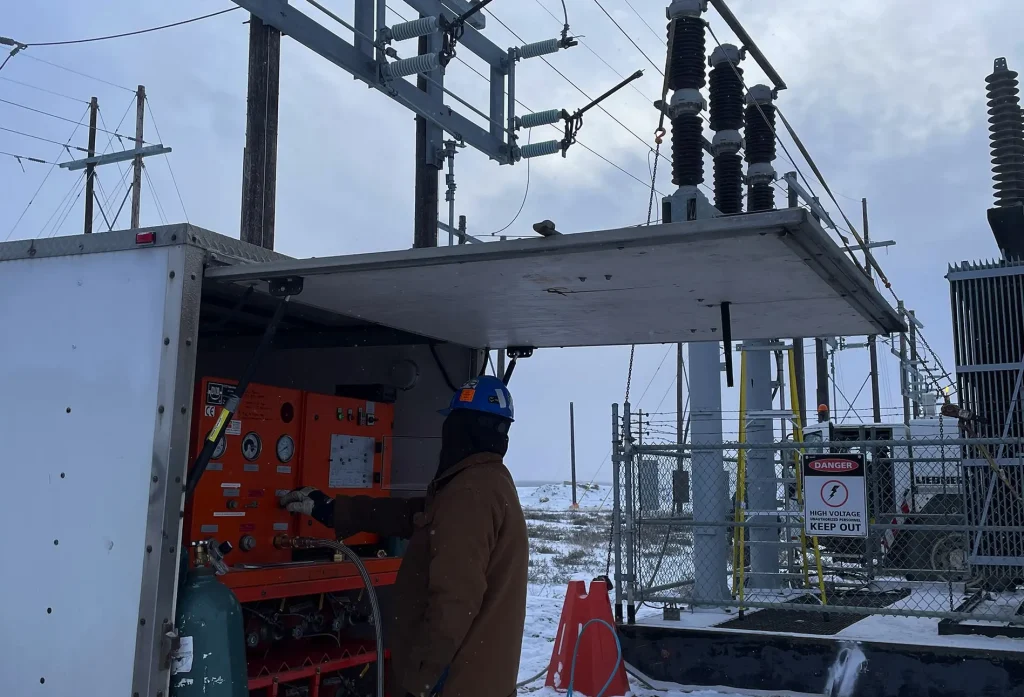
Sunbelt Solomon understands flexibility is a priority for our clients. Our extensive nationwide network of service centers and technicians allows us to provide comprehensive in‑field repair services, quickly completing smaller repairs on-site without moving your transformer.
When a repair requires more extensive work, we’ll route your unit to the nearest repair center. These facilities operate 24/7 for emergency service and handle pickups and returns. We’ll minimize your concerns and keep you informed while we manage the entire process.
3. Emergency Transformer Rentals
Extended power interruptions aren’t an option for most businesses and households. Our quick‑ship rental transformers let you stay operational while Sunbelt Solomon’s knowledgeable pros work on repairing or replacing your equipment, reducing downtime and giving you room to plan your next move.
4. Upgraded Equipment
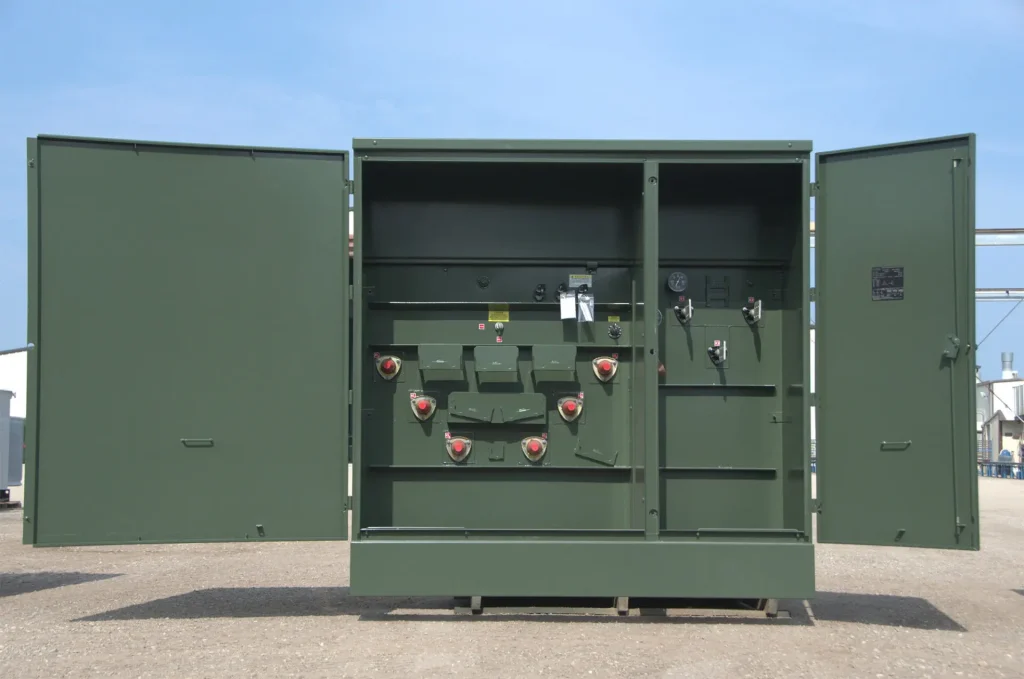
Many clients choose to upgrade after experiencing transformer damage. Sunbelt Solomon offers substation transformers with custom K‑ratings that guard your system against harmonic distortion, especially in automation‑heavy environments. And if you need something more specialized, we can design a custom transformer built around your requirements.
Request a Quote From Sunbelt Solomon Today
In over a century of combined experience, Sunbelt Solomon has consistently helped our clients find high-quality transformers and components — and we’ve expanded our services throughout the years. Today, we rent, repair and recycle transformers and other electrical equipment, giving you a single, reliable place to turn. Whether you need a niche component or a custom‑built transformer, our one-stop electrical system shop has you covered.
Request a quote today or call 888-687-1487!