

For companies in the energy, industrial and commercial sectors, sustainability may be a daily operational expectation. Businesses managing infrastructure or wanting to meet Environmental, Social and Governance (ESG) targets may seek practical and cost-effective ways to support greener practices.
Reconditioned transformers are a sustainable solution that’s gaining traction. These units are rebuilt, tested and certified to meet performance standards. They offer a smart alternative to buying new, helping organizations extend asset lifespan, reduce waste and conserve valuable materials.
Discover how reconditioned transformers serve as eco-friendly power equipment.
What Are Reconditioned Transformers?
A reconditioned transformer is a previously used unit that providers restore to operational condition. Reconditioning follows a series of inspections, repairs and testing to deliver safe, reliable performance.
A transformer is suitable for reconditioning if it shows signs of wear and tear that can be replaced or repaired. The process can extend a unit’s lifespan by a few years.
Reconditioned energy systems can be an affordable and eco-friendly alternative to buying new ones. They help control costs with shorter lead times and reduce environmental impact. This approach is aligned with circular economy principles of reconditioning existing assets. It helps conserve raw materials, reduce waste and lower the carbon footprint of manufacturing new equipment.
Power equipment providers can recondition most types of units, including the following:
- Power transformers
- Distribution transformers
- Substation and pad-mounted units
Reconditioned transformers must comply with safety and performance standards to be deployed in the field. The American National Standards Institute (ANSI), in collaboration with the Institute of Electrical and Electronics Engineers, guides testing procedures, tolerances and practices that providers follow.
Reconditioning operations include the following:
- Electrical and mechanical testing
- Inspection reports and oil analysis
- Upgrades to insulation and bushings as needed
- Final verification to meet regulatory standards
- Documentation and reporting
Benefits of Reconditioned Transformers
Choosing a reconditioned unit can support operations, reduce costs and help companies meet sustainability goals. Here are six perks of opting for a reconditioned transformer.
1. Reduces Costs
The primary advantage of reconditioned electrical transformers is savings, as they typically cost less than new equipment. Lower upfront costs tie into sustainability. Companies can reinvest the money saved into other green energy initiatives, like renewable energy projects or energy-efficient upgrades.
Reconditioned may also perform at or near factory-new levels, thanks to rigorous testing and reconditioning processes. This helps companies cut costs and ensure reliable performance while meeting their green goals.
2. Minimizes Waste and Reliance on New Materials
Every new transformer requires raw materials, energy and shipping. Choosing reconditioned units means committing to the principles of a circular economy. By extending the lifespan of existing power equipment, businesses minimize landfill waste and lower their carbon footprints.
Reconditioning supports material conservation, especially in the use of valuable materials. This reduces the environmental burden associated with mining and resource extraction.
3. Delivers Faster Lead Times
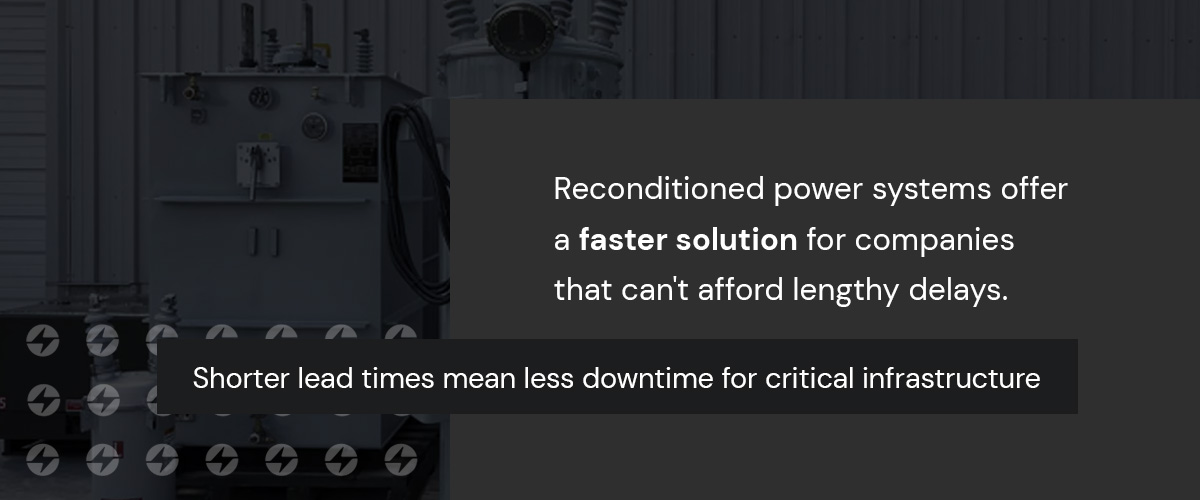
New transformers can take months to manufacture and deliver, especially for custom orders. Reconditioned power systems offer a faster solution for companies that can’t afford lengthy delays. Shorter lead times mean less downtime for critical infrastructure, reducing reliance on temporary, resource-heavy solutions like generators.
Reconditioned transformers come from an extensive existing inventory, making them more readily available. This minimizes shipping emissions and the duration of sourcing materials globally.
4. Provides Reliable Performance and Durability
Fully tested and restored units with new insulation, bushings and oil purification can perform at or near the same level as new ones. Many transformers undergo diagnostics and upgrades during reconditioning, improving reliability for current power demands. Proper maintenance post-installation ensures continued durability.
Reconditioned transformers that perform well over the years reduce the demand for new equipment and the environmental costs of frequent manufacturing and disposal.
5. Offers Custom Flexibility
Transformer providers can tailor reconditioned units to meet your specific requirements and align with unique green energy projects. They can be upgraded to increase energy efficiency or improve monitoring systems as part of renewable integration and grid modernization goals.
Custom engineering on reconditioned units reduces the need for infrastructure overhauls. By modifying an existing power system to fit your needs, you’re ensuring that older units continue to support evolving, sustainable projects without needing new builds that would consume valuable resources.
6. Supports Risk Management and Business Continuity
Reconditioned equipment provides flexibility and reliability that support long-term sustainability and risk management. They reduce the strain on critical infrastructure because businesses can use them as spares to prevent overloading, extend the lifespan of existing units and reduce the need for emergency energy-intensive power units. This approach helps companies minimize waste, energy consumption and logistical strain that comes with unplanned downtime.
Transformer Reconditioning Process
Transformer reconditioning is a multi-step process that can restore full functioning, extend service life and meet safety and performance standards.
Here’s how the process typically unfolds.
Initial Assessment
Providers start with a full inspection to identify wear and performance issues. Assessments typically include the following:
- Visual inspections to identify external damage, corrosion, oil leaks or worn connections.
- Tests and scans to detect hot spots, potential arcing or loose internal connections. Tests may also include insulation resistance, turns ratio and winding resistance to reveal degradation in coils and cores.
- Oil analysis to assess moisture, acids or dissolved gases.
Disassembly and Cleaning
Once energy equipment is approved for reconditioning, it’s dismantled to expose internal components for cleaning and repair.
Providers may follow the steps below:
- Remove and clean windings, bushings and core laminations to remove contaminants.
- Strip and treat cooling fins, surfaces and paint to prevent corrosion and improve heat dissipation.
- Recycle or discard oils and other hazardous residues according to environmental and safety protocols.
Repair and Replacement
Within this step, components are repaired, replaced or upgraded.
The process typically includes:
- Rewinding or updating coils.
- Updating deteriorated insulation materials.
- Replacing seal, gasket and bushings.
- Reassembling or refinishing the unit.
- Upgrading with energy-efficient components where needed.
Reassembly and Final Testing
Once rebuilt, the transformer is reassembled with careful attention to alignment, seals and pressure integrity. It also goes through a comprehensive round of testing, including:
- High voltage testing to ensure no dielectric breakdown under operational voltage.
- Load bank testing to check performance under simulated conditions.
- Leak testing to confirm tank and gasket integrity.
- Testing to verify if upgrades work as expected.
Explore Cost-Effective Transformer Solutions from Sunbelt Solomon
If you’re considering reconditioned energy-efficient transformers, you want a partner who understands the technical demands, regulatory expectations and sustainability goals of running critical infrastructure. At Sunbelt Solomon, we have over 100 years of experience providing power solutions for various sectors.
Our power units comply with IEEE and industry safety standards. Businesses that work with us invest in safety and reliability, rapid deployments and sustainable practices. We also buy, rent, recycle, maintain and repair transformers, making us your full-service power solutions partner.
Contact our team today for sustainable energy solutions.