

Supply chain bottlenecks can stretch transformer lead times from weeks to years, depending on what type of transformer you need. The delay can leave you vulnerable, as aging infrastructure may fail without warning. When the power goes down on an active jobsite, schedule delays compound by the hour.
Contractors and other decision-makers who plan their response before failures occur can restore power in hours instead of days. Temporary rentals and emergency repairs offer proven pathways that don’t rely on new equipment arriving fast, allowing operations to continue. Choosing the right option now can help protect project margins and critical deadlines later.
Understanding the High Cost of a Single Failure
Power failures can escalate from maintenance issues to financial crises within hours. Unplanned downtime costs can range significantly across industries, with some sectors experiencing losses between $100,000 and $500,000 per hour. For construction sites, this translates to thousands lost daily when crews sit idle.
Missed milestones can trigger liquidated damages in addition to emergency power costs. When dealing with utility connection delays or power failures, immediate action is essential. Waiting only amplifies costs across every project line item.
Quantifying Downtime Beyond Just Lost Hours
Electricians, operators and subcontractors collect full wages even when power outages prevent productive work. Rental companies don’t waive their fees if the equipment can’t work while you’re renting it.
Time-sensitive materials create additional losses when power interruptions strike mid-task. Concrete hardens in trucks, coatings cure improperly and chemical products spoil or require expensive rework. Each departure and return cycle multiplies mobilization costs, while recovery efforts often incur extra labor costs from overtime or weekend work.
The Ripple Effect on Crew Deadlines and Contracts
Power failures break crew momentum and disrupt task sequencing across every trade on-site. Schedule slippage on one project cascades into conflicts with upcoming jobs that are already booked.
Clients and vendors view repeated outages as planning failures rather than unforeseeable events. Contractual penalties, liquidated damages and withheld retainage often follow when critical deadlines slip. Reputation damage can extend beyond individual projects because word travels quickly in regional construction markets.
Rent or Repair? Making the Critical First Decision
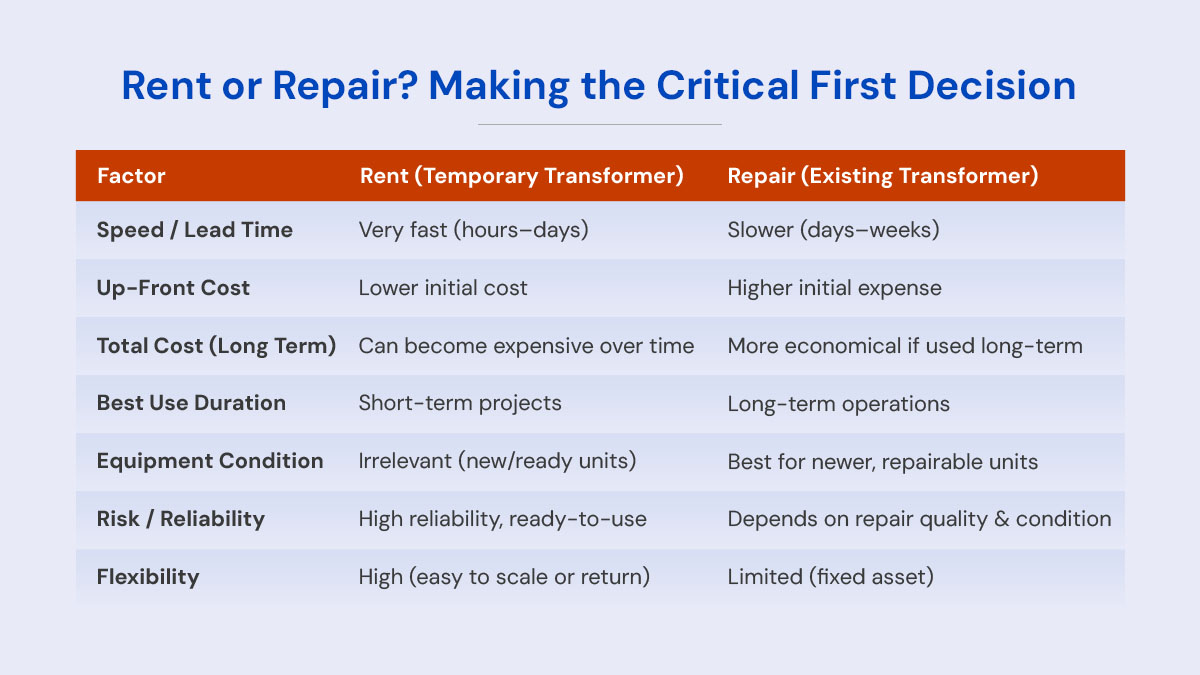
Transformer failures force project teams into an immediate choice between temporary rentals and emergency repairs. The better choice comes down to speed of restoration and longevity of the solution.
Short-term needs tend to favor rental, while long-term reliance justifies repair investments. A structured decision framework prevents guesswork and helps owners choose the most economical jobsite power distribution strategies when time is scarce. Sunbelt Solomon’s dual-capability approach supports both pathways, enabling decision-makers to access the right solution for their specific situation.
1. Evaluate for Speed and Lead Time
Most temporary power rentals arrive pre-engineered and ready to commission within days or even hours, depending on provider inventory and location. Equipment delivery and energization often happen before repair shops complete diagnostic testing.
Repair timelines depend on failure mode and factory queue times. Waiting for components can push schedules out by days or weeks. When schedule pressure is extreme, the speed of renting becomes a more efficient solution than waiting.
2. Compare Up-Front vs. Total Project Cost
Rentals typically require a more modest initial investment that may help preserve working capital. Extended projects face mounting daily or monthly charges that may eventually exceed repair expenses.
Emergency repairs can demand significant up-front spending for diagnostics, parts and specialized labor. When transformers retain years of service life, spreading repair costs over that operational period lowers the effective annual expense.
3. Assess the Age and Condition of Your Equipment
Older transformers with documented insulation aging or oil degradation rarely justify the expense of reconditioning. High residual value makes newer units with limited operating hours stronger candidates for repair investment.
The most common causes of failure occur over time, such as:
- Machine age and wear
- Insulation breakdown
- Dust and debris buildup
- Damage from overloading
- Moisture contamination
- Loose power connections
These issues are more likely to lead to failure. A realistic assessment of age, maintenance history and failure mode helps you avoid over-investing in equipment nearing its end of life.
4. Consider the Project’s Expected Duration
Matching power strategy to the remaining schedule aligns cash flow with actual jobsite needs. Temporary rentals can help bridge the gap for projects with only a few weeks or months remaining, while early failures in multiyear programs may justify repair or replacement to support long-term site use.
Path A: The Strategic Rental Pathway
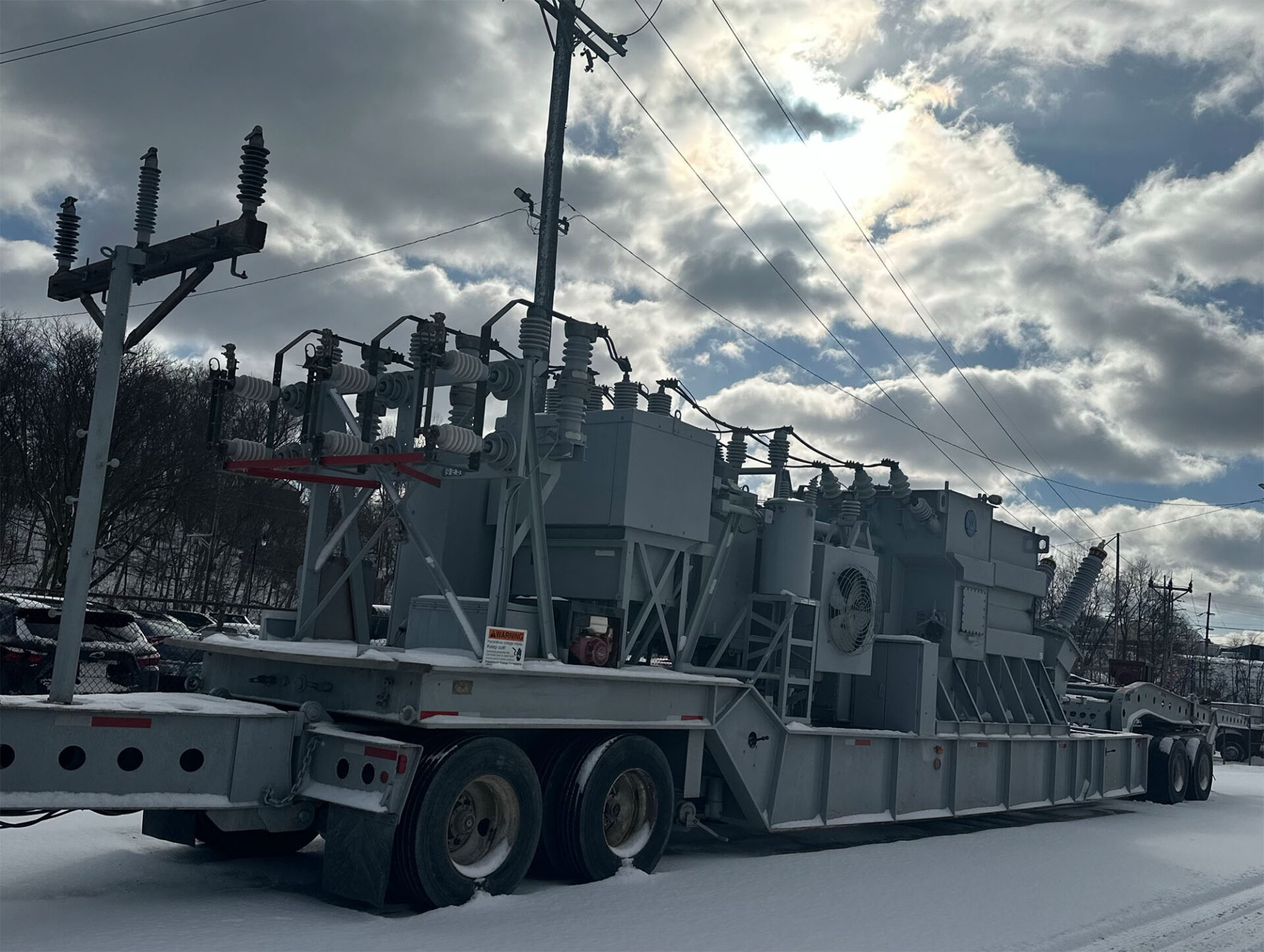
Temporary power rental programs give contractors fast access to transformers and distribution gear sized for their sites. Renting lets you bypass long lead times and keep projects on schedule when permanent solutions sit months away.
Rental fleets typically include a range of voltages and kVA ratings that match existing infrastructure without requiring custom engineering. Decision-makers gain flexibility to scale equipment up or down as projects move through different phases. Sunbelt Solomon’s temporary power rental capabilities support emergency power for construction sites across the country.
When to Choose a Temporary Power Rental
Choose rental when rapid power restoration is the top priority and every outage hour threatens project viability. Old, lightly maintained transformers are often not worth significant rebuilding, making rental the practical choice.
Rentals are often the right choice for short-term or seasonal projects because no underutilized assets will remain after the project is completed. While permanent gear undergoes repair or waits to be delivered, rentals keep crews working.
Key Features of a Reliable Rental Solution
Strong rental offerings include transformers, switchgear and distribution equipment packaged as single integrated systems for convenience. High-quality flexible cables simplify routing on crowded sites and reduce installation time.
Pre-engineered skids and trailers allow faster setup and safer operation under real jobsite conditions. Crews can monitor loads and avoid nuisance trips through integrated protection, metering and control equipment. Sunbelt Solomon’s packaged power solutions deliver turnkey installations that minimize downtime.
Path B: The Emergency Repair Pathway
Dedicated transformer repair partners offer both standard maintenance and true emergency transformer repair services for critical failures. Repair pathways focus on restoring existing assets to safe, reliable service rather than replacing equipment.
For many decision-makers, repairs preserve fleet standardization and leverage prior investments in spare parts and operator training. Sunbelt Solomon provides emergency power for construction sites through both rental and repair services, depending on which approach best serves your project’s needs.
When Transformer Repair Is the Right Call
Repair often makes sense for newer transformers with significant remaining service life. Failed bushings or auxiliary components typically respond well to targeted repairs, allowing them to be quickly restored without full replacement.
Long-term facilities or project sites that rely on specific units for years benefit from restoring and retaining assets already integrated into the site infrastructure. Properly executed repairs using quality materials and comprehensive testing can deliver impressive durability of electrical equipment.
What to Expect From a Turnkey Repair Service
Turnkey providers begin with a rapid on-site assessment, testing and fault diagnosis, using specialized in-field services to quickly identify failure modes. Crews handle de-energization, oil processing and preparation for transport or on-site repair as conditions require. Shop capabilities include rewinding, core and coil work, bushing replacement and control system upgrades.
Get Your Jobsite Back Online with Sunbelt Solomon
Supply chain delays and aging infrastructure increase the risk of transformer failures, threatening schedules and budgets. Sunbelt Solomon combines quality equipment, rapid response and deep technical expertise to step in and keep your operations going, whether you need rental or repair.
Our assessment teams evaluate failure mode, timeline pressure and budget constraints to identify the fastest practical solution. Because we maintain rental fleets and repair facilities nationwide, we respond to projects of any size or location. Connect with our specialists to restore your power and get your crews back to productive work.