

If you manage power infrastructure, sometimes you’ll need to handle units that no longer meet operational needs. You may be concerned about managing disposal without adding risk or encountering delays. Safety, compliance, cost and sustainability are always concerns. One option would be to recycle your power equipment.
Recycling your transformer can help you recover value without compromising sustainability or safety. Explore the business and environmental impact of recycling transformers.
8 Transformer Recycling Benefits
When a transformer reaches the end of its useful life, how you handle it can impact your budget, operations and environment. Explore how eco-friendly equipment disposal supports financial security and sustainable business practices below.
1. Saves Costs
Transformers contain valuable materials like copper, aluminum and steel. These metals can be reclaimed and reused, reducing the need to purchase raw materials or pay full price for replacements.
Additionally, disposing of old transformers containing polychlorinated biphenyls (PCBs) can incur hazardous material fees, detailed environmental reporting requirements and transport costs. Recycling is a cleaner, more regulated alternative. Instead of paying for disposal, businesses can route those same materials into productive reuse channels by working with providers specializing in reconditioning, repurposing or safely dismantling units.
While there may still be some associated fees, companies can achieve cost savings through recycling by bundling with services that reduce operational burden and regulatory exposure. If a transformer retains any residual value, recycling can offset costs or return some value to the business.
2. Reduces Pollution and Landfill Waste
Old transformers contain materials that can become hazardous when improperly handled or dumped. When recycled responsibly, these substances are safely drained, neutralized or reused in compliance with the Environmental Protection Agency (EPA) standards.
Recycling minimizes the risk of oil contamination, groundwater pollution or accidental releases, which carry cleanup costs and regulatory consequences. It also protects communities where your business operates.
Sending a transformer to a landfill occupies space and introduces long-term risk. Oils and chemicals can leach into soil and water supplies, while metal components corrode and contribute to pollution. Recycled transformers ease the burden on the environment and create responsible infrastructure management.
3. Protects Business Reputation
Increasingly, customers, investors and local communities want to know how companies manage waste, emissions and life cycle impacts.
Choosing to recycle transformers communicates to stakeholders that you understand long-term environmental impact. These choices can build trust and position your company as a forward-thinking operator.
4. Eases Regulatory Compliance
Transformer recycling simplifies the compliance process by reducing the chance of mishandling tightly regulated materials.
Power equipment with hazardous materials requires careful disposal under federal and state guidelines. Mishandling them can result in penalties and remediation costs.
Working with a recycling partner ensures the collection, transport, disassembly and material processing are done in line with regulatory expectations. It reduces legal exposure and streamlines documentation, so you’re covered if environmental audits or inspections arise.
5. Supports the Circular Economy
The circular economy is a model built on reuse, where materials are kept in use as long as possible. Recycling transformers feeds into that cycle. The metals recovered go back into new equipment, reducing reliance on new materials and supporting domestic manufacturing. Components that can’t be reused may be processed to reduce waste and extend resource life.
6. Saves Energy
The energy it takes to recycle metal may be lower than the energy required to mine and refine that same material from scratch. For example, copper from recycled materials saves up to 85% of the energy needed for mining and extraction. That energy savings can also reduce emissions.
From a carbon accounting perspective, transformer recycling is valuable for companies looking to achieve sustainability targets or improve their environmental, social and governance (ESG) reporting.
7. Creates Jobs
Recycling supports a growing sector of skilled labor. When companies recycle transformers, they support workers who responsibly disassemble, test, process and transport material. Businesses help create a supply chain that values responsibility and economic opportunities.
8. Promotes Sustainable Sourcing
When companies recycle transformers, they reduce the need for raw materials. Recycling lowers demand for mining and extraction industries and supports responsible sourcing. It also shortens supply chains, which often means fewer transportation emissions and less exposure to geopolitical risks tied to material availability.
Sourcing reclaimed materials also contributes to product transparency and traceability for organizations looking to maintain sustainable business practices.
How Sunbelt Solomon Facilitates Transformer Recycling
Sunbelt Solomon has a system that simplifies the power equipment recycling process for industrial, commercial and utility customers. Here’s how we help organizations balance environmental and financial stability.
Full Service Recycling
With over 100 years of combined experience in transformer life cycle management, we’ve developed a full-service approach to recycling that supports environmental responsibility with business efficiency.
We work with you to assess what can be salvaged or refurbished and what needs to be responsibly dismantled.
Our service includes:
- Decommissioning and teardown: Our substation teardown service safely removes and dismantles large-scale transformers and related equipment. This service includes oil draining and sampling, disconnection and testing and cleanup.
- Recycling and material recovery: We extract reusable metals, recover mineral oil and responsibly dispose of hazardous substances. We also provide record-keeping support and liability protection.
- Disposition of surplus equipment: If you have surplus power equipment sitting idle, we’ll help evaluate its remaining value. We refurbish and reintroduce these assets into the market, reducing demand for new production and supporting a circular economy.
Safety and Environmental Compliance
We follow strict safety protocols, which help us maintain secure working environments. Our team also adheres to the Institute of Electrical and Electronics Engineers (IEEE) standards for equipment handling, oil management, and site safety.
We also make it easier for your business to meet its regulatory obligations and maintain financial stability. That reduces the risk of fines, delays or reputational issues caused by improper disposal.
Support a Circular Economy
Our recycling program is about more than end-of-life services. We create value throughout the equipment life cycle. By reconditioning and reselling transformers, we extend the life of critical infrastructure while helping businesses reduce capital expenditure.
When you work with us, you turn retired assets into economic and environmental wins.
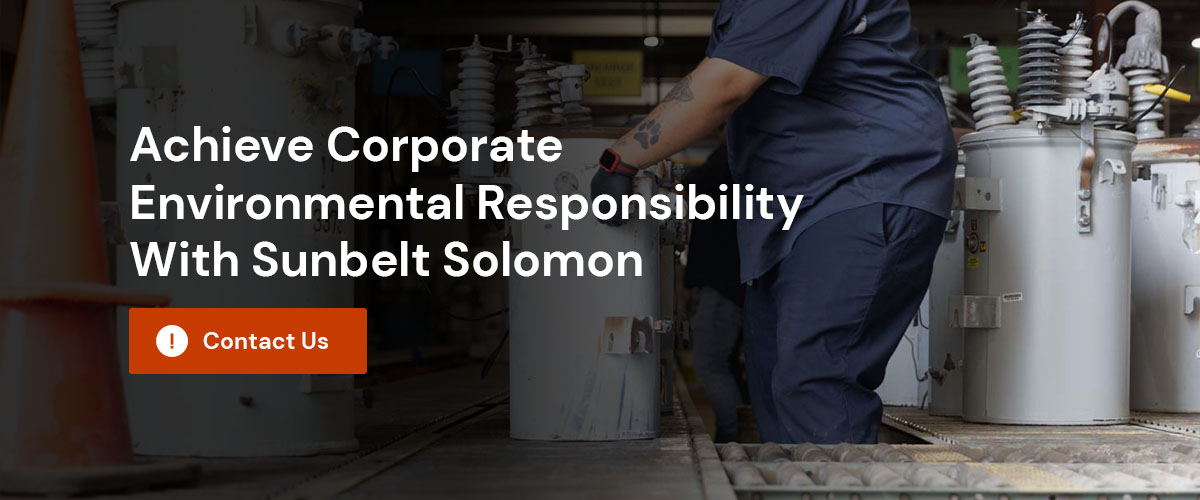
Achieve Corporate Environmental Responsibility With Sunbelt Solomon
Sunbelt Solomon has over 100 years of experience providing turnkey solutions for industrial, commercial and utility industries. Our team handles every phase of a transformer’s life cycle from purchase, reconditioning and maintenance to rental and end-of-life disposal. We may help you recover value from existing assets while maintaining compliance and safety.
We operate to IEEE safety standards and hold ourselves to high environmental and quality benchmarks. Our commitment to sustainability is reflected in our waste reduction and circular economy practices.
With an extensive inventory, we can provide fast turnarounds and customized equipment options for your operations. Contact us today to learn how we can support your green energy initiatives.