


Industry 4.0 integrates cloud connectivity, AI and machine learning to reinvent how businesses design, manufacture and distribute their products. Companies can combine their people’s creativity, talent and innovation with the accuracy and speed of sophisticated tools to improve efficiency and productivity.
Modern manufacturing has an increasing demand for efficient and reliable power solutions in modern manufacturing. Smart power for automation and connectivity supports the needs of industrial and manufacturing facilities; data centers; the military; and mining, oil and gas operations.
Understanding Industry 4.0
Industry 4.0 is all about connecting the digital and physical worlds of manufacturing. It involves leveraging Internet of Things (IoT) technologies, artificial intelligence (AI), connectivity, big data and augmented reality interfaces to create a more innovative manufacturing process.
Industry 4.0 generates vast amounts of data, which AI systems analyze to recommend actions to improve factory operation. The approach uses a flexible network of cyber-physical production systems to achieve high-level automation of production processes. Automated production systems can respond in real time to optimize in-house production.
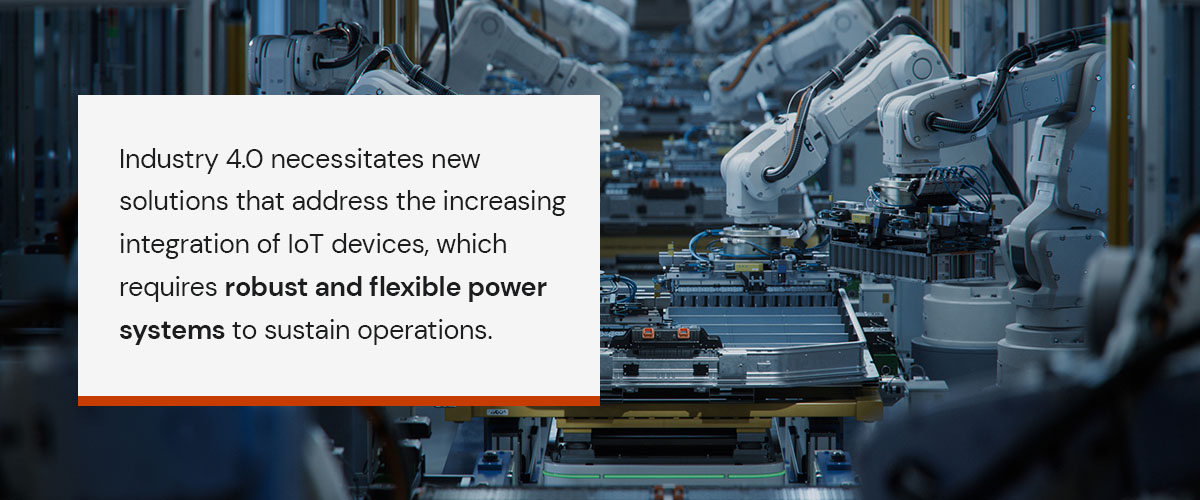
In a smart factory, where everything is connected and interdependent, problems in one area can impact the rest of production. Your smart factory should be able to adapt to power malfunctions and market conditions. Industry 4.0 necessitates new solutions that address the increasing integration of IoT devices, which requires robust and flexible power systems to sustain operations.
The Industrial Power Needs of Modern Manufacturing Facilities
In industrial manufacturing, everything operates on a grand scale. Machines produce critical components and essential items while adhering to tight schedules. A power failure in this environment can be costly and potentially dangerous. To combat this, energy storage systems and Uninterruptible Power Supplies (UPS) are essential. These solutions meet industrial power needs and ensure the factory floor runs smoothly during power interruptions. With these systems, industrial manufacturers can balance energy loads, reduce strain on the grid and minimize costly downtime.
In pharmaceutical manufacturing, for example, every process must adhere to strict regulations, such as Good Manufacturing Practices (GMP). Even a brief power interruption can jeopardize cleanrooms and disrupt refrigeration systems that store temperature-sensitive vaccines. Such power loss risks contamination that can compromise patient safety, leading to financial and legal repercussions.
Sustaining smooth manufacturing processes requires a reliable and high-quality power supply. Manufacturers in various industries face some challenges regarding industrial power management. Traditional power systems struggle to meet the demands of Industry 4.0 technologies such as IoT devices, robotics and automation. Smart manufacturing factories need adaptable, scalable power solutions to meet increasing demands.
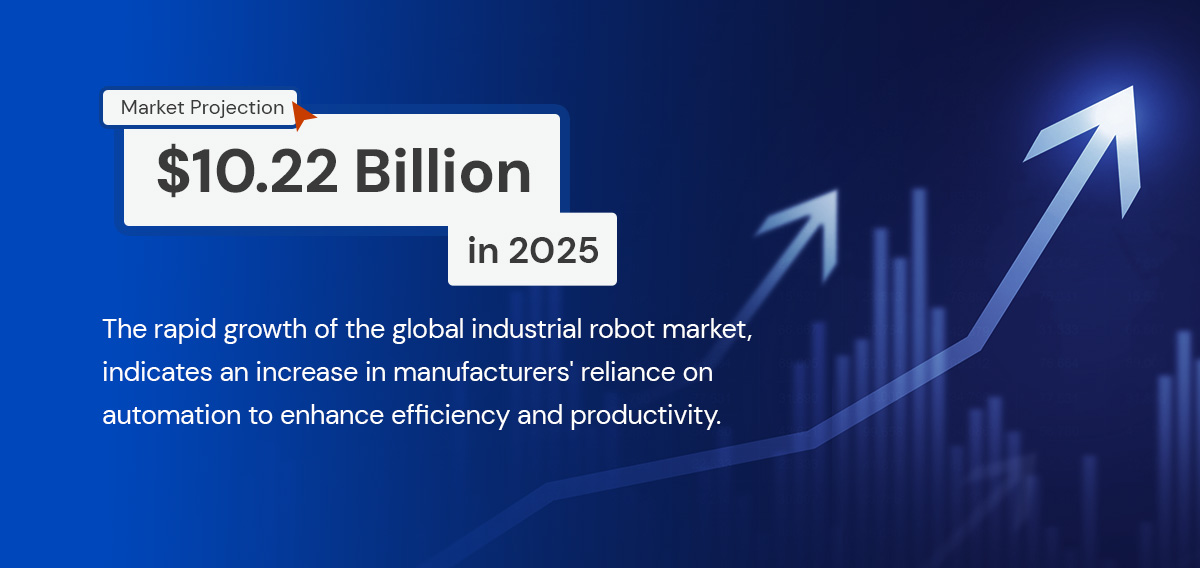
The rapid growth of the global industrial robot market, projected to reach US$10.22 billion in 2025, indicates an increase in manufacturers’ reliance on automation to enhance efficiency and productivity. Modern manufacturing facilities face unique energy challenges, demanding innovative power solutions that ensure reliability and efficiency.
Energy storage systems and generators provide the necessary backup to maintain critical operations and protect sensitive materials. By prioritizing robust power management, pharmaceutical companies can ensure they meet regulations and uphold their commitment to patient safety.
Smart Power Solutions for Industry 4.0
Industry 4.0 technologies can collect and analyze data on energy consumption and other factors contributing to your carbon footprint. Measuring these emissions helps companies identify areas of improvement, implement energy-efficient solutions and develop strategies to reduce carbon footprint and meet sustainability goals.
Smart factories require smart power solutions that enable real-time energy management, reduce operational costs and facilitate operational efficiency and sustainability. Smart power solutions incorporate advanced technologies to manage energy use effectively. Power solutions tailored to meet the needs of Industry 4.0:
- Renewable energy sources, such as solar, wind and bioenergy
- Energy storage systems, like batteries and other storage technologies
- Microgrids, which provide localized energy management
- Smart grid technologies, which integrate with IoT for real-time power management
Enhancing Productivity Through Power Management in Industry
As technology advances, industry leaders need to adopt ways to improve operations and cut costs in energy management. One tool for this is predictive analysis. By collecting and analyzing data from smart meters and sensors, companies can gain insight into their energy usage patterns to identify opportunities for optimization. IoT integration connects energy sources, smart meters and building automation systems to monitor usage and adjust settings. For example, commercial buildings can connect smart thermostats, occupancy sensors and lighting controls to adjust temperature and lighting during unoccupied periods to achieve energy savings.

Machine learning enables automated decision-making based on real-time data. Algorithms can analyze historical data to identify anomalies in energy consumption patterns and optimize energy usage. As energy demands continue to rise, companies must harness the power of big data and machine learning to reduce costs and minimize environmental impact.
Connectivity and Automation: The Future of Manufacturing Power Solutions
Smart factories need innovative power solutions that use real-time data on battery power, voltage and current to manage the charging needs of autonomous machines. Power supplies with heat and payload sensors can monitor the charging process, while proximity sensors allow robots to identify obstructions and locate charging stations on the factory floor.
The future of achieving energy efficiency in manufacturing hinges on connectivity. Reliable power solutions ensure that interconnected systems can operate seamlessly. AI and machine learning are revolutionizing smart buildings by predicting peak energy usage times to adjust system settings accordingly and reduce energy costs. Here’s how Industry 4.0 technologies can help reduce energy usage:
- Smart sensors can detect when machines are not in use and turn them off to limit energy consumption. They also collect data that offers operators insights on proactive measures to limit energy use.
- Machine learning algorithms can identify energy patterns that implement adjustments for optimal energy consumption.
- Automated machines can work at peak efficiency while using as little energy as possible.
Implementing Power Management in Manufacturing
One of the hallmarks of the Fourth Industrial Revolution is the potential to analyze and operationalize data to improve and evolve smart factories. Factories require robust power solutions to support continuous communication between autonomous vehicles and human operators on the factory floor. Industries can take several actionable steps to implement power management strategies:
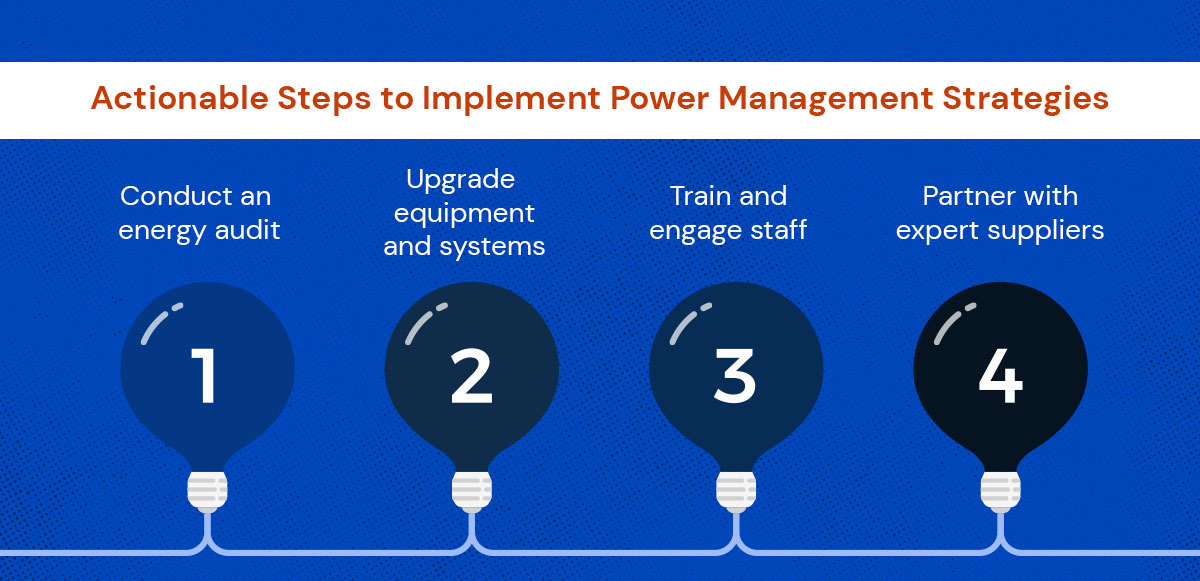
- Start with a comprehensive energy audit to identify inefficiencies and areas for improvement. This assessment will provide a baseline for measuring progress.
- Upgrade to energy-efficient equipment, power monitoring systems and automation tools.
- Educate staff on energy-saving practices and the importance of sustainability. Empower them to identify energy waste and suggest improvements.
- Collaborate with knowledgeable suppliers to develop solutions that meet your power management needs. They can guide you in implementing strategies that enhance efficiency and reduce costs.
Organizations can enhance productivity, reduce operational costs and contribute to sustainability by adopting cutting-edge power solutions.
Challenges in Implementing Smart Power Solutions and Overcoming Them
As we’ve explored, the transition to Industry 4.0 requires manufacturers to rethink their power strategies. Like with many new technologies, the transition may come with a few challenges.
- High initial investment: The upfront costs of advanced power solutions and technology can be high. Conduct a cost-benefit analysis to prove long-term savings and seek financing options.
- Integration with existing systems: Legacy systems may not be compatible with new smart technologies. Start with pilot projects to test integration before a full-scale rollout.
- Skill gaps and training needs: Employees may lack the skills to operate and maintain new technologies. Invest in continuous education to equip staff with the skills to manage smart power solutions.
- Data overload: The vast amounts of data generated can overwhelm existing data management systems. Install data analytics platforms that filter and prioritize data to extract actionable insights without overloading the system.
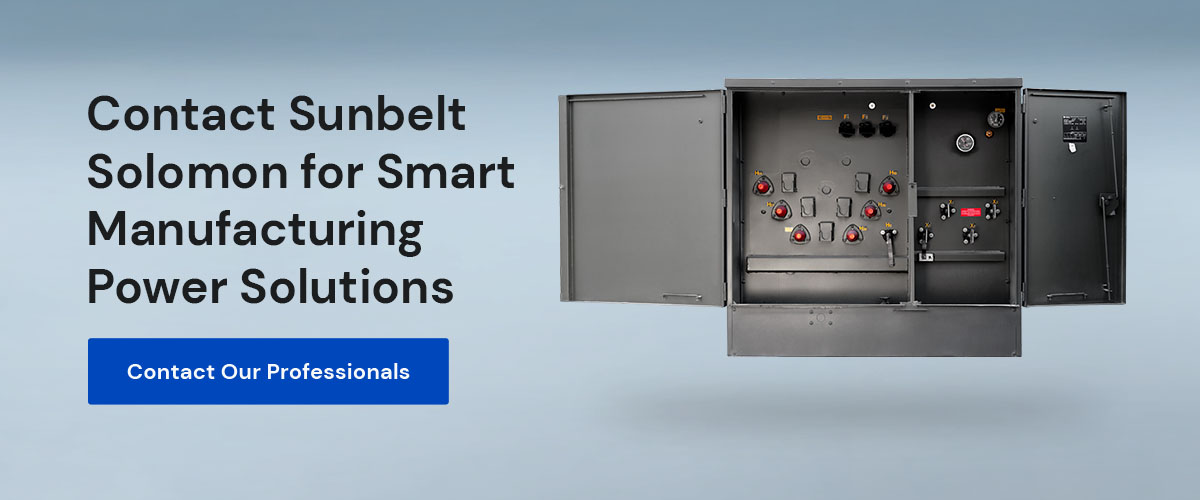
Contact Sunbelt Solomon for Smart Manufacturing Power Solutions
Looking for reliable power solutions to energize your smart factory? Sunbelt Solomon has you covered with various efficient and cost-effective offerings. We provide solutions for investor-owned utilities, cooperatives and municipalities, offering transformers, switchgear and related installation, repair and maintenance services. Need quick setup? Our rental equipment offers speedy solutions without hefty upfront costs.
At Sunbelt Solomon, we combine expertise with personal service to ensure your business maintains consistent operational efficiency. Contact us today to learn more about enhancing your factory’s power management.